Blog

Local SEO Charleston SC: A Practical Guide to Ranking in the Lowcountry
If you run a business in Charleston, local visibility is no longer something you can treat as a side project. Over the years, we’ve worked with businesses across the globe, and one pattern is consistent: companies that rely on word of mouth or outdated SEO tactics eventually hit a wall.
Local SEO in Charleston SC is now the primary way customers discover services. Whether someone is searching on King Street, in Mount Pleasant, or from their phone in West Ashley, Google’s local pack determines who gets the call and who gets skipped.
What has changed recently is not just how competitive local SEO has become, but how search behavior itself is evolving. Understanding that shift is the difference between short-term rankings and durable visibility.
This guide explains how local SEO actually works in Charleston, what we’ve seen firsthand across industries and neighborhoods, and how modern strategies boost both traditional rankings and AI-driven discovery.
Why Local SEO Matters More in Charleston Than Most Cities
Charleston behaves differently than many markets. Search demand fluctuates with tourism, events, and seasonality. Mobile searches dominate. Neighborhoods function like micro-markets rather than a single citywide ecosystem.
In practice, that means the same local SEO strategy rarely works everywhere.
Downtown businesses may lose visibility during peak season simply because review velocity slowed, while competitors surged. Professional firms in Mount Pleasant can struggle because their websites answered questions too vaguely, even though their services were strong. Home services companies in North Charleston win consistently when their mobile experience and citation accuracy are dialed in.
Google surfaces the local pack early in the results because it knows users want fast, local answers. If you are not present there, you are competing for a fraction of the available demand.
What Local SEO Charleston SC Actually Involves
Local SEO is often described as a checklist, but in reality it is a system built around clarity and trust. At a minimum, local SEO in Charleston SC requires:
- A properly optimized Google Business Profile
- Accurate local citations across authoritative directories
- Locally relevant content that reflects real search behavior
- Strong technical site health
- A steady stream of credible reviews
When these elements work together, Google can confidently answer three questions: what you do, where you operate, and whether your business should be trusted.
How Google Ranks Businesses in the Local Pack
Google evaluates local results using relevance, proximity, and prominence. That framework is well known. What matters is how it plays out on the ground.
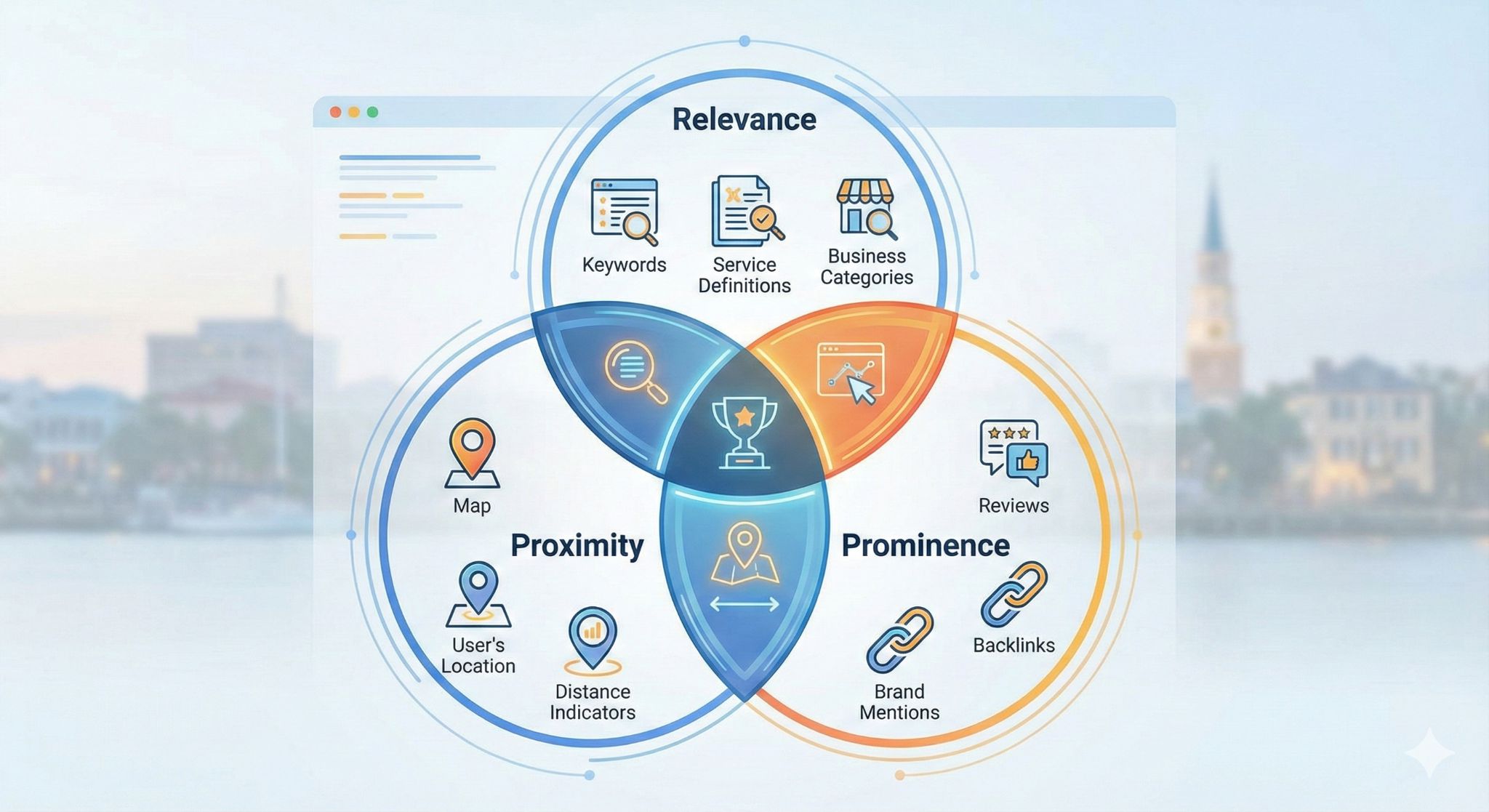
Relevance is driven by category selection, service definitions, keyword placement, and structured content. We routinely see businesses miscategorize themselves, which quietly suppresses their visibility.
Proximity is dynamic. Rankings shift depending on where the search originates. While you cannot control that, citation accuracy and consistent local data help Google resolve location signals correctly.
Prominence is where most Charleston businesses either win or stall. Reviews, brand mentions, local backlinks, and engagement all feed into this signal. Businesses that treat reputation management as an afterthought rarely hold local pack positions for long.
Local SEO Is Not the Same Across Charleston Neighborhoods or Industries
One of the biggest mistakes we see is assuming Charleston is a single competitive environment.
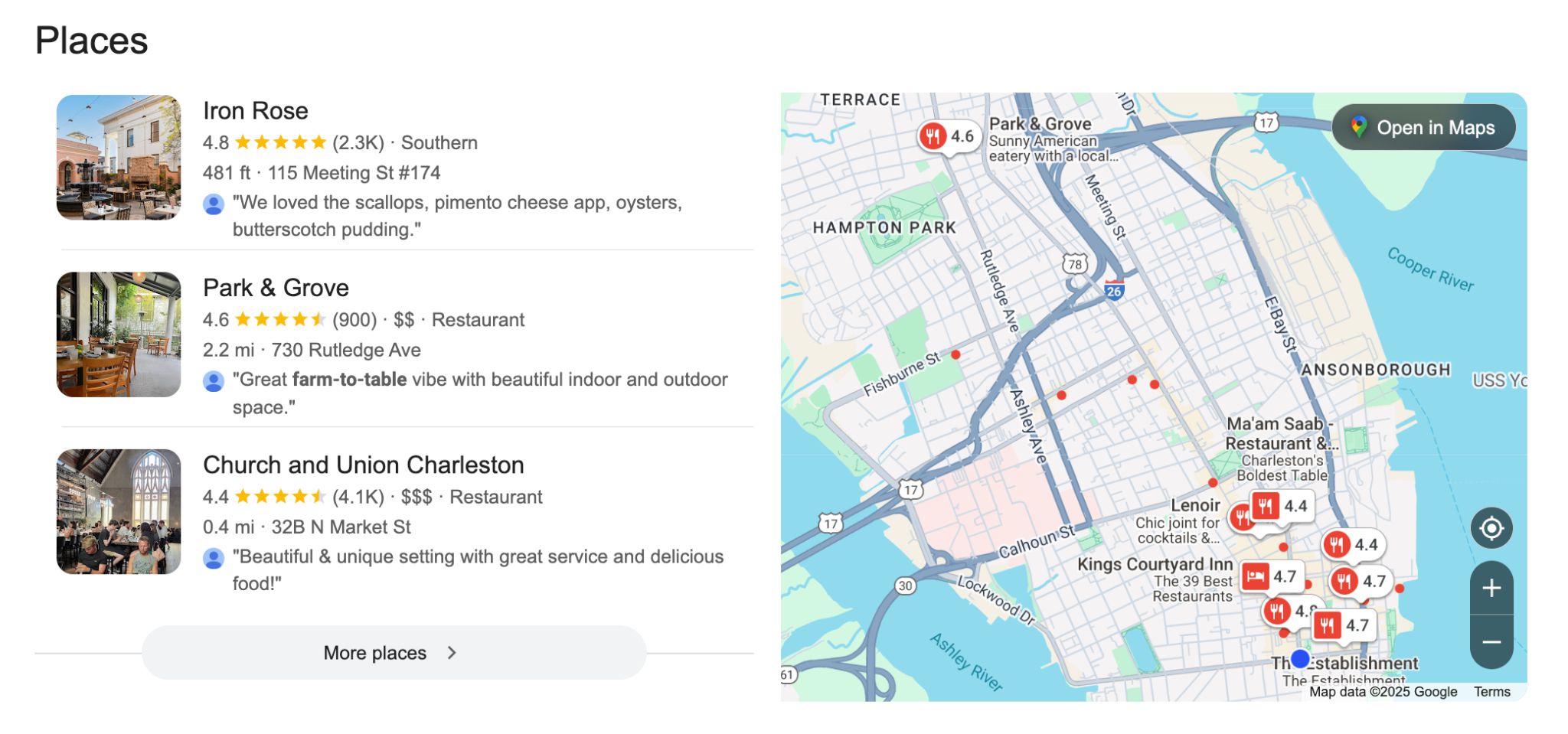
Restaurants and hospitality brands downtown live and die by mobile search behavior and review momentum. Visibility can change block by block, especially during events or tourist surges. In these cases, Google Business Profile optimization and real-time engagement matter more than long-form content.
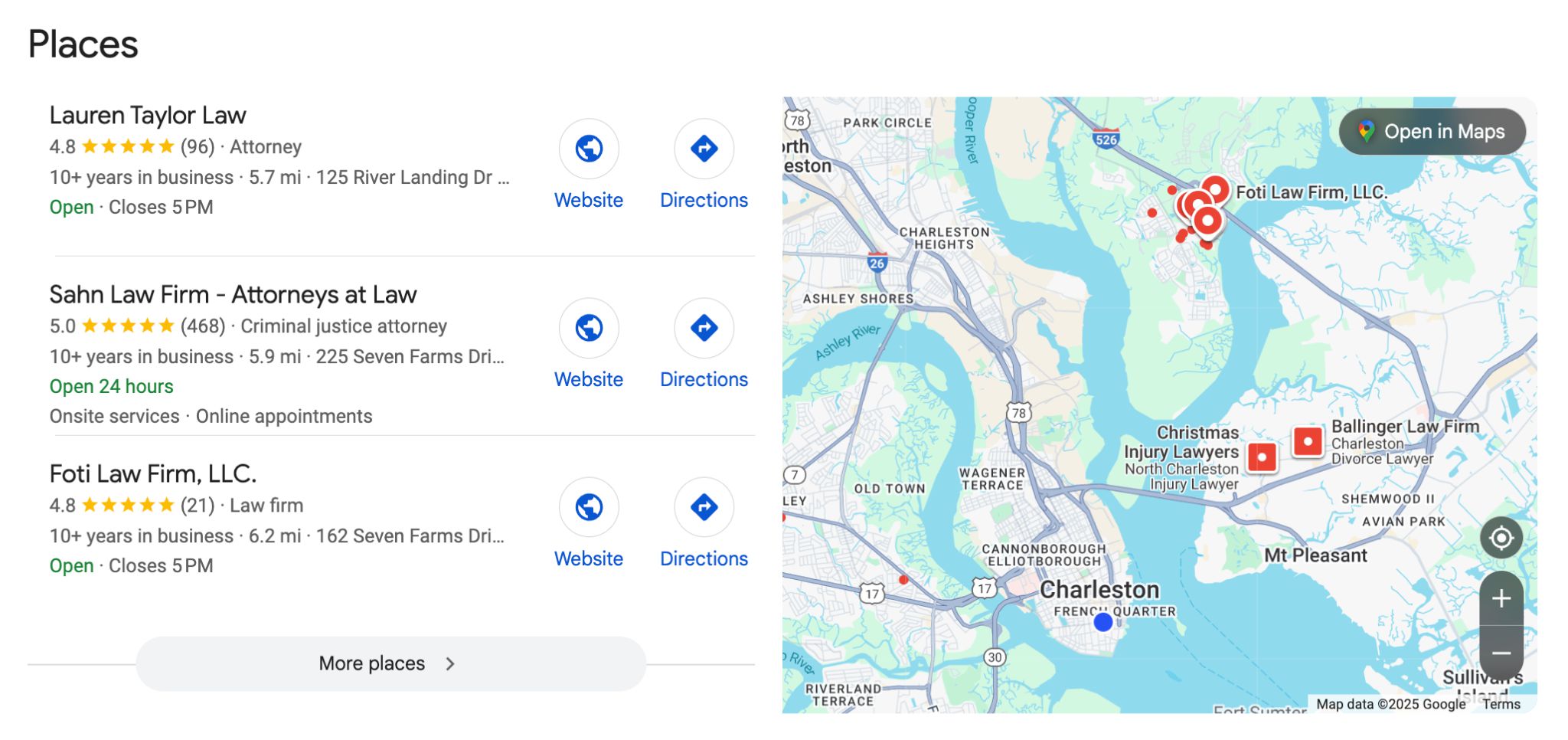
Professional services firms in areas like Mount Pleasant or Daniel Island operate on longer decision cycles. Prospective clients research, compare, and read. Here, internal linking, structured content development, and authority signals supported by analytics carry more weight.
Home services companies across West Ashley and North Charleston compete on urgency. We’ve seen fast-loading mobile pages, optimized metadata, and clean citation management outperform larger brands with better name recognition.
User behavior differs, and Google follows that behavior closely.
Core Local SEO Components That Actually Move the Needle
Over time, we’ve found that sustainable local SEO performance depends on how well the fundamentals reinforce one another.
- Google Business Profile management is foundational. That includes categories, services, descriptions, photos, videos, posts, and community features like Q&A. Reviews are monitored not just for volume, but for sentiment and patterns.
- Technical optimization ensures your site can support visibility. Crawlability, index status, internal linking, website speed, and mobile optimization all influence how reliably your content appears. Technical site health issues often explain why strong businesses plateau.
- Local content development ties everything together. High-performing content reflects Charleston search trends, references neighborhoods naturally, and answers real questions. Service explainer videos and business walkthroughs increase engagement and support conversion strategies.
- Citation management reinforces trust. Consistent business information across local directories and authoritative directories helps Google validate your location and legitimacy.
Advanced Local SEO Strategies We See Working in Charleston
Once the basics are solid, advanced strategies determine whether rankings stabilize or decay.
Mobile-first design is no longer optional. Google measures user behavior directly. We pay close attention to load times, navigation clarity, and how easily users can take action. Optimized metadata that fits mobile screens improves click-through rates and supports local pack consistency.
Voice search is increasingly relevant, especially for service-based queries. These searches are conversational and intent-driven. Optimizing for them means writing naturally, structuring FAQs, and using structured data to clarify services and location.
Seasonal content and event-based strategies are particularly effective in Charleston. Search demand spikes around festivals, tourism peaks, and weather-driven needs. Businesses that plan content ahead of these cycles consistently capture visibility before competitors react.
Schema markup and structured data help search engines interpret context precisely. LocalBusiness schema, review markup, and service schema reduce ambiguity and improve eligibility for enhanced results.
Why Google Looks Beyond Its Own Reviews
One of the most misunderstood aspects of advanced local SEO is how Google evaluates trust. While Google reviews are the most visible signal, they are not the only one.
In practice, Google looks for confirmation that a business is recognized and trusted beyond its own ecosystem. This includes third-party review platforms, industry-specific directories, and local authority sites. We’ve seen this repeatedly in competitive Charleston markets, where businesses with fewer Google reviews but stronger off-platform reputation hold local pack positions more consistently.
Platforms like Yelp, the Better Business Bureau, and Apple Maps reviews often act as corroborating signals. For B2B and professional services, sites like TrustRadius, G2, or industry-specific directories provide additional validation. When sentiment and service descriptions align across these platforms, Google has greater confidence in the business as an entity.
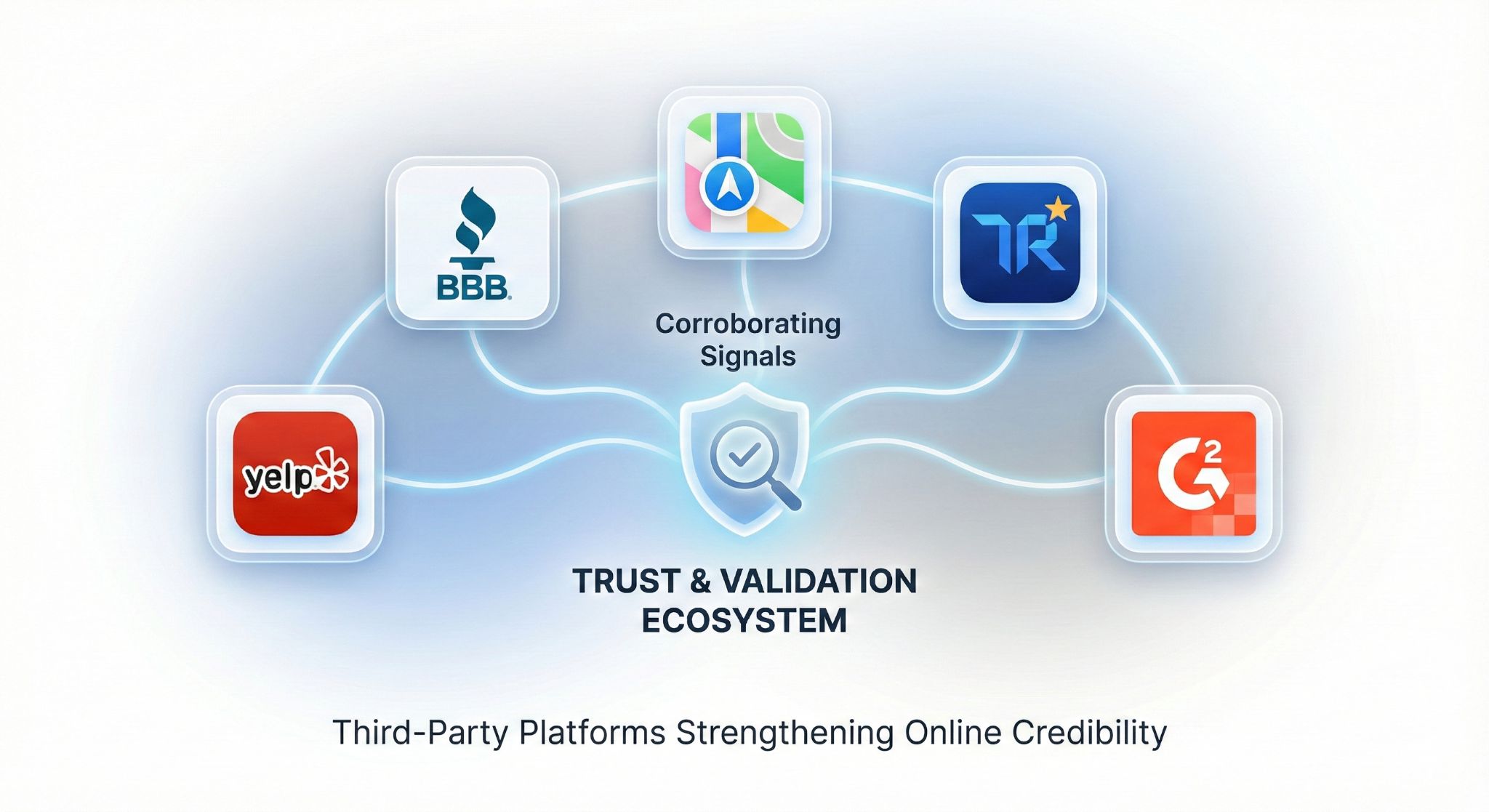
This distributed trust matters even more as search becomes increasingly AI-driven. AI systems favor consensus. Businesses that present consistent reputation signals across multiple sources are easier for both algorithms and users to trust.
How AI Is Changing Local Search and Why GEO Matters
Search behavior is shifting in ways that traditional SEO alone does not fully address. Users increasingly expect direct answers, not lists of links. Google’s AI-powered results, voice assistants, and conversational search interfaces prioritize content that is clear, specific, and grounded in real-world expertise.
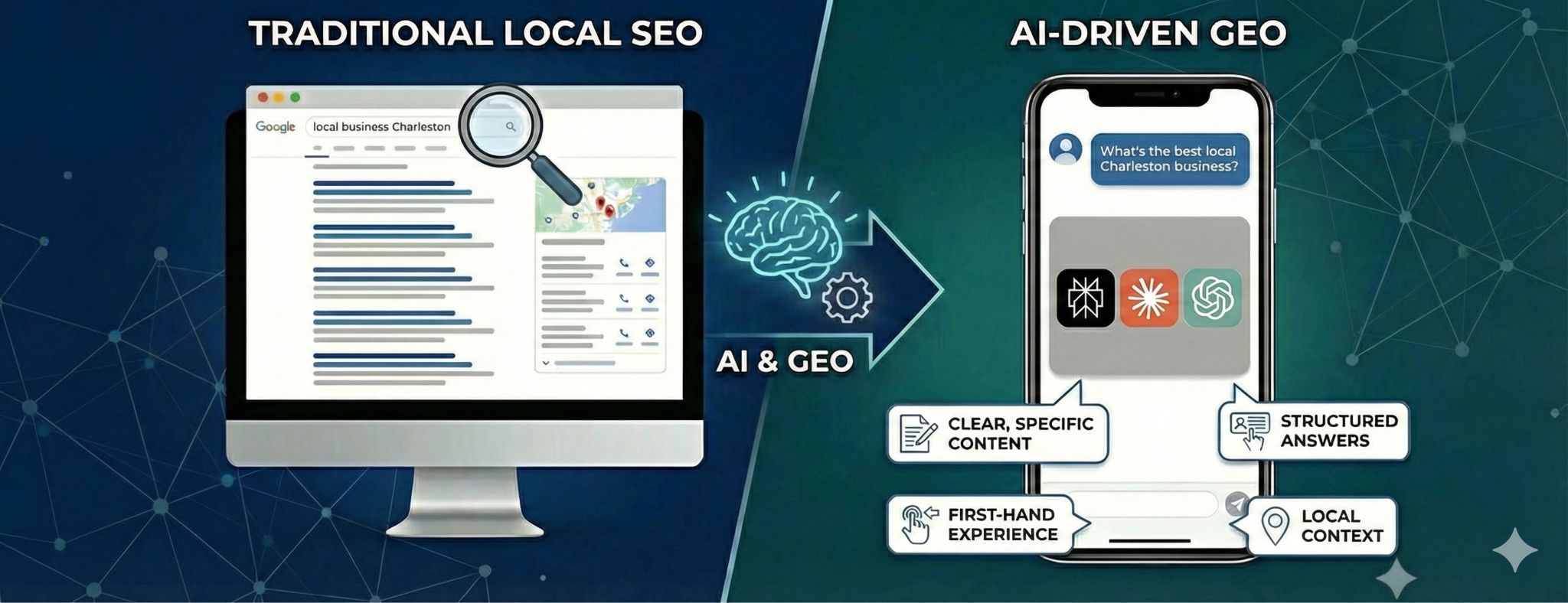
This is where Generative Engine Optimization (GEO) matters.
In practice, GEO means structuring content so it is easily understood, cited, and summarized by AI systems. We focus on:
- Clear explanations rooted in first-hand experience
- Explicit connections between problems and solutions
- Structured sections that answer real questions directly
- Context that reflects local realities, not generic advice
We’ve already seen AI-driven results favor content that demonstrates actual operational understanding. Pages that repeat keywords without adding information gain are less likely to be surfaced in these environments.
Optimizing for GEO does not replace traditional local SEO. It complements it by future-proofing visibility as search interfaces continue to evolve.
Measuring Local SEO Success Beyond Rankings
Rankings matter, but they are not the outcome.
We rely on Google Analytics to track conversions, qualified leads, and user behavior. Google Search Console helps monitor index status, crawlability, and keyword coverage.
Map pack presence is tracked across different parts of the city, not just from one location. We correlate that data with review activity and visibility metrics to understand what is driving movement.
Choosing the Right Local SEO Partner in Charleston
If you work with an agency, local context matters.
A strong Charleston SEO partner understands neighborhood dynamics, industry differences, and how local search behavior actually plays out. They begin with a deep-dive audit, not assumptions. Transparent reporting and measurable outcomes matter more than promises. The best partnerships adapt strategy based on data and real-world performance, not templates.
Agencies with strong customer reviews, visible Google Business Profiles, locally relevant content, and real ties to the Charleston community tend to deliver more durable results.
Common Questions About Local SEO Charleston SC
How long does local SEO take to show results? Most businesses see meaningful movement within three to six months, depending on competition and starting point.
Why am I not appearing in the local pack? Common issues include incorrect categories, inconsistent citations, weak prominence signals, or technical site health problems.
Do reviews really influence rankings? Yes. Reviews affect both visibility and conversion behavior, especially in competitive Charleston markets.
How is local SEO different from general SEO? Local SEO focuses on geographic relevance, local citations, and proximity-driven intent rather than broad national visibility.
Final Thoughts
Local SEO in Charleston SC is no longer about chasing tactics. It is about aligning your online presence with how people actually search, decide, and act in this market.
Businesses that combine strong fundamentals, advanced local strategy, and an understanding of how AI is reshaping discovery are the ones that will remain visible as search continues to evolve. This is not about gaming algorithms. It is about earning trust, clearly, and at scale.
About the Author
Weston Fennell leads the Charleston office of Downtown Ecommerce Partners, which he established in 2021 to bring the firm’s strategic capabilities to the Southeast.
Drawing on a diverse background in operations, hospitality, and large-scale logistics, Weston approaches digital marketing as a comprehensive business consultant. He understands that effective strategy isn’t just about visibility—it’s about aligning digital initiatives with operational realities to drive sustainable growth.
Weston advises clients in Charleston, nationally, and worldwide, acting as a true partner in their success. Whether working with a local institution or a global brand, his focus remains consistent: creating holistic digital strategies that solve business challenges and deliver measurable, high-impact outcomes.


